

If you experience harassment at work, California law gives you the right to report the behavior and seek protection. However, you need to learn the right steps to file a valid and strong complaint, and that's why we've provided this comprehensive guide for you.
Filing a workplace harassment complaint in California usually involves various steps, including reporting the issue to your employer, submitting a complaint to the California Civil Rights Department, and possibly filing a lawsuit if the issue is not resolved. Understanding this process can help you protect your rights and avoid mistakes that may weaken your claim.
If you're facing or previously faced harassment at work, our California workplace harassment lawyers at Westview Law can help protect your rights and fight for you. With 40 years of combined experience, we will evaluate your case, help you understand your rights, protect your job, and pursue the financial compensation you deserve. We're always prepared to fight for you in court, so you don't have to accept lowball settlement offers under pressure. Schedule a free consultation with us today.
This blog explains how to file a workplace harassment complaint in California, the steps to take beforehand, the evidence required, possible outcomes, and common mistakes to avoid.
Steps to Take Before Filing a Workplace Harassment Complaint
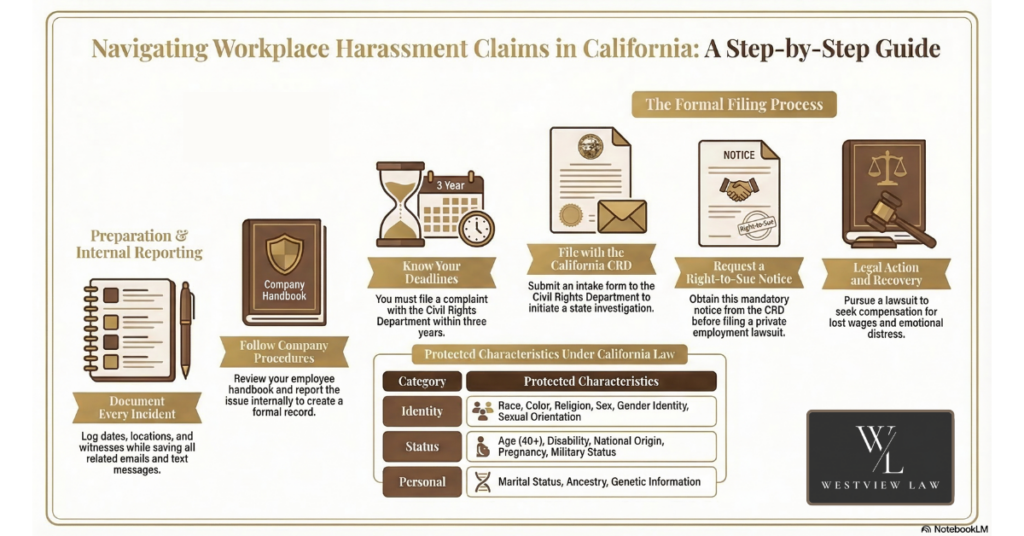
Before you file a formal workplace harassment complaint in California, there are some steps you should take to strengthen your case. These steps also make it easier for investigators or attorneys to evaluate the situation. The recommended steps include the following.
1. Document Every Incident
You should keep detailed records of the harassment incidents. Make sure you write down the date, time, location, and description of each incident. Note the names of anyone involved or who witnessed the behavior. In addition, save supporting evidence such as emails, text messages, chat logs, photos, or performance reviews that may be related to the harassment.
2. Review Your Employer’s Harassment Policy
Following your employer’s official reporting procedure can strengthen your claim. It shows that you attempted to resolve the issue through the company’s designated process. In California, most employers are required to maintain written anti-harassment policies and reporting procedures. Hence, review your employee handbook or workplace policies to understand the requirements and process to follow to report complaints internally.
3. Report the Issue Internally
It's usually recommended to first report the harassment to your employer before filing a complaint with a government agency. To report internally, you may have to notify a supervisor, manager, HR departments, or use an internal complaint hotline if your employer has one. That way, you give the employer an opportunity to investigate the issue and take corrective action. It also creates a formal record that the employer was aware of the problem.
4. Gather Supporting Evidence and Witnesses
If coworkers witnessed the harassment or experienced similar treatment, their statements may support your claim. If you can, identify potential witnesses and keep track of their contact information if possible. You should also organize any relevant documents, such as written complaints, disciplinary records, or HR communications. Having this information ready can make the complaint process more efficient.
5. Consider Speaking With an Employment Attorney
Before filing a workplace harassment complaint, you need to understand your legal rights and options. And that's where a workplace harassment lawyer comes in. They can explain whether the behavior qualifies as unlawful harassment under California employment law and advise you on the best way to proceed. Moreover, legal guidance may also help you avoid mistakes that could weaken your claim during the complaint or investigation process. It's important to choose a workplace harassment lawyer who is experienced and has a record of trial-tested case outcomes.
How to File a Workplace Harassment Complaint in California

About 75% of employees who went through workplace harassment never reported it, according to the U.S Equal Employment Opportunity Commission (EEOC). While some are afraid of not being believed, other fear blame or workplace retaliation.
To address these issues, California provides a structured process that allows California employees to report harassment, request an investigation, and pursue legal action if necessary. Understanding each step can help you protect your rights and avoid mistakes that can sabotage your complaints. Here, we've provided a step-by-step guide you can follow.
Step 1: File a Complaint With Your Employer
The first step is to report the harassment to your employer. Reporting the issue internally creates a record that the employer was informed about the harassment. It also gives the employer an opportunity to investigate and take corrective action.
When filing the complaint, clearly describe what happened and provide as much detail as possible. Clearly note the dates of the incidents, the people involved, and any witnesses who may have seen or heard the behavior. You can also include supporting evidence such as emails, messages, or written communications.
You may be asked to report the issue to a supervisor, manager, or the Human Resources department. Most companies have internal procedures for handling workplace complaints, which are usually outlined in the employee handbook or company policies.
Step 2: File a Complaint With the California Civil Rights Department (CRD)
If the harassment continues or the employer does not properly address the situation, you can file a complaint with the California Civil Rights Department (CRD). This state agency enforces workplace protections under the California Fair Employment and Housing Act (FEHA).
To start the process, you will submit an intake complaint form describing the harassment and identifying your employer. The form can usually be submitted online through the department’s complaint portal. After reviewing the information, the agency may contact you for an intake interview to gather additional details about your claim. If the agency determines the complaint may involve unlawful harassment, it may open an investigation or offer mediation to resolve the dispute.
Step 3: Request a Right-to-Sue Notice
Instead of waiting for the the CRD investigation process, you can decide to file an employment discrimination lawsuit in court. If you prefer this option, it's recommended you have an experienced workplace harassment lawyer. Then, you'll have to request a Right-to-Sue notice from the CRD. Meanwhile, note that if you get a right-to-sue notice, the CRD will no longer investigate your complaint even if you later decide to not file a lawsuit.
Step 4: File a Lawsuit If Necessary
If the CRD administrative process cannot resolve your case, the next step may be to file a workplace harassment lawsuit. A lawsuit allows you to present your claim in court and seek compensation for damages such as lost wages, emotional distress, or other losses related to the harassment. Remember that you must obtain a right-to-sue to be able to file a lawsuit. Moreover, you need an experienced employment law legal team that is well-versed in California workplace harassment laws. The lawyers can help evaluate your case, prepare the necessary legal documents, and guide you through the court process.
What Evidence Is Required For a Workplace Harassment Case?

To support a workplace harassment claim, you need to provide evidence that shows the behavior occurred and created a hostile or abusive work environment. Common types of evidence include emails, text messages, internal chat messages, voicemails, or written communications that contain offensive remarks or inappropriate conduct. Personal notes or records describing each incident, such as the dates, locations, and people involved, can also help establish a pattern of harassment over time.
Witness statements can also be important evidence in a harassment case. If there are coworkers who saw the behavior or experienced similar treatment, they may be able to confirm what happened. In addition, documents such as formal complaints to Human Resources, company investigation reports, performance reviews, or disciplinary records may help show that the employer knew about the harassment and how they responded to it. Together, this evidence helps investigators, attorneys, or courts evaluate whether unlawful workplace harassment occurred.
Potential Outcomes of a Workplace Harassment Complaint

Filing a workplace harassment complaint in California can result in various possible outcomes. It depends on the findings of the investigation and how the employer responds.
In some cases, the issue may be resolved through mediation or an internal investigation. If the complaint is confirmed true, the employer may take corrective action against the person responsible for the harassment. This could include disciplinary measures such as a warning, suspension, mandatory training, demotion, or wrongful termination.
If the issue is not resolved internally, the complaint may lead to a legal settlement or a court case. Employees who pursue legal action may be able to recover damages for losses related to the harassment. These damages can include compensation for lost wages, emotional distress, or other harm caused by the workplace environment.
In some cases, the employer may also be required to change workplace policies or implement training to prevent future harassment. For instance, a case of workplace harassment based on sexual orientation may trigger the employer to run a sexual harassment prevention training to prevent future occurrences.
Common Mistakes to Avoid When Filing a Harassment Complaint
Certain mistakes can weaken your workplace harassment claim or make the complaint process more difficult. If you're facing workplace harassment, you should be aware of these common errors so you can handle the situation more carefully and improve the chances of a fair outcome. Such mistakes include:
- Not documenting the harassment: If you don't keep detailed records of the incidents, it can be harder to prove that harassment occurred. That's why we recommend you write down dates, locations, what was said or done, and the names of anyone involved or who witnessed the behavior.
- Waiting too long to report the issue: Delaying a complaint can make it more difficult to investigate the situation. As you delay, evidence may be lost, memories may fade, and important deadlines may pass. On the other hand, reporting the harassment as soon as possible helps preserve important details and strengthens the complaint.
- Failing to follow the employer’s reporting procedures: Most workplaces have specific procedures for reporting harassment. Ignoring these procedures may create problems later, especially if the employer claims they were never properly informed about the issue. So, it's important to review the company’s harassment policy and follow the correct reporting process.
- Not saving evidence: Employees sometimes delete messages or fail to keep copies of emails and other communications that could support their claim. Keeping such relevant evidence can help demonstrate what happened.
- Discussing the complaint publicly or on social media: Posting about the situation online or discussing it widely with coworkers can complicate the complaint process. It may also affect workplace relationships or the credibility of the claim. It is usually better to keep the matter private and discuss it only with appropriate parties, such as HR or an attorney.
- Not working with an experienced attorney: Handling a workplace harassment claim on your own is usually not as easy as it may seem. Remember, mistakes in the process can weaken your complaint and reduce your chances of success. On the other hand, working with a seasoned workplace harassment lawyer will help you understand the most appropriate actions to take to protect both your rights and your job.
Need an Attorney For Your Harassment Case?
Filing a workplace harassment complaint in California is an important step toward protecting your rights and stopping unlawful behavior. By documenting incidents, following your employer’s reporting procedures, understanding the legal process, and working with a strong legal representation, you can build a stronger claim and improve your chances of a fair outcome.
However, the complaint procedures can be complex, and mistakes can weaken your case or delay settlement or verdict. Therefore, it's recommended to work with an experienced workplace harassment lawyer who can help ensure that your complaint is handled properly and that your rights are fully protected.
If you need help with a workplace harassment complaint, the California employment lawyers at Westview Law are ready to assist you. We can review your case, guide you through each step of the process, and fight for the compensation and protection you deserve. Contact us today for a free consultation.
FAQs
With over 40 years of combined experience, our workplace harassment lawyers at Westview Law have provided clear answers to some of the most common questions about filing a California workplace harassment claim.
What is the deadline to file a workplace harassment complaint in California?
In California, you must file a workplace harassment or discrimination complaint with the Civil Rights Department (CRD) within three years of the last act of harassment. Meeting this deadline is essential to preserve your right to a Right-to-Sue Notice, which enables you to pursue legal action in court.
Do I need proof before filing a workplace harassment complaint in California?
No, you do not need complete proof before filing a complaint. However, having some evidence such as messages, emails, notes, or witness names can strengthen your claim. Even if you have limited evidence, you can still report the harassment and allow investigators to review the situation.
Can I file a workplace harassment complaint anonymously in California?
Some employers allow anonymous internal complaints through reporting hotlines or online systems. However, filing anonymously can sometimes make investigations more difficult because investigators may need more details from you. If you file a complaint with a state or local agency, you usually need to provide your identity.
Can I be fired for filing a workplace harassment complaint?
No. California law prohibits employers from retaliating against employees for reporting harassment or participating in an investigation. Retaliation can include termination, demotion, reduced hours, or other negative treatment. If retaliation occurs, you may have a separate legal claim against your employer.
What if the person harassing me is not my supervisor?
Workplace harassment can still be illegal even if it comes from a coworker, client, vendor, or contractor. Employers have a responsibility to address harassment once they know about it. If they fail to take reasonable steps to stop the behavior, they may be held legally responsible.
Can I file a harassment complaint after leaving my job?
Yes. Employees can still file a harassment complaint even after they leave the workplace. As long as the complaint is filed within the legal deadline, you may still pursue a claim against your former employer.
How long does a workplace harassment investigation usually take?
The length of an investigation depends on the complexity of the case and the number of witnesses involved. Internal employer investigations may take a few weeks, while government agency investigations can take several months. The timeline may also change if the case moves to mediation or court.
Can a workplace harassment complaint lead to compensation?
Yes, in some cases employees may recover compensation if harassment caused harm. This may include lost wages, emotional distress damages, and other financial losses related to the harassment. The exact outcome depends on the evidence and how the case is resolved.
What laws protect employees from workplace harassment in California?
Workplace harassment is mainly regulated by California's Fair Employment and Housing Act (FEHA). This law makes it illegal for employers, supervisors, or coworkers to harass employees based on protected characteristics. It also requires employers to take reasonable steps to prevent and address harassment in the workplace. In some cases, federal laws like Title VII of the Civil Rights Act may also apply.
What are protected characteristics under California harassment laws?
Protected characteristics are personal traits that cannot legally be used as a reason to harass someone at work. Under California law, these include race, color, religion, sex, gender identity, sexual orientation, age (40 or older), disability, national origin, marital status, pregnancy, and military or veteran status. Harassment based on any of these traits may violate state law if it is severe or repeated enough to create a hostile work environment.
What actions qualify as workplace harassment in California?
Workplace harassment in California includes unwelcome behavior directed at an employee because of a protected characteristic. Examples include unwanted sexual advances, offensive jokes or slurs, verbal abuse, threats or physical intimidation, unwelcome touching, and sharing offensive images or messages. Harassment can also involve repeatedly excluding or mistreating someone because of traits such as race, religion, age, gender, or disability.